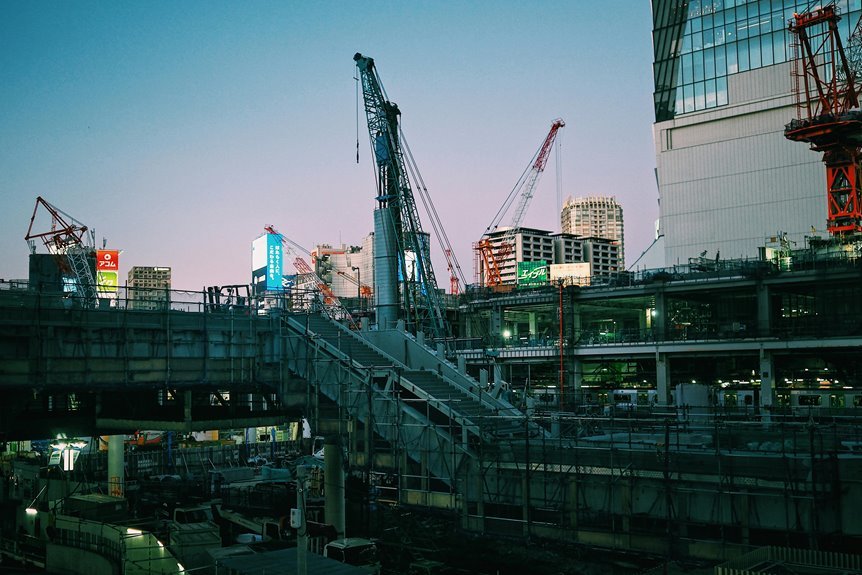
You might find it intriguing to explore the current landscape of global infrastructure projects, where innovative technologies are reshaping construction methods. While advancements like 3D printing and smart materials promise efficiency, significant challenges remain, from funding issues to regulatory barriers. This duality raises questions about the future of infrastructure development. What strategies are being implemented to overcome these obstacles, and how will they influence economic growth moving forward?
Key Infrastructure Projects Around the World
Across the globe, several key infrastructure projects are reshaping economies and improving connectivity.
These initiatives prioritize sustainable development, ensuring that financial resources are allocated effectively.
Project financing plays a crucial role, enabling nations to tackle pressing challenges while fostering growth.
Technological Innovations in Construction
As construction projects evolve, technological innovations are revolutionizing the industry, making processes more efficient and sustainable.
You’ll find that 3D printing is streamlining the building process, allowing for rapid prototyping and reduced waste.
Additionally, smart materials adapt to environmental changes, enhancing durability and energy efficiency.
These advancements not only improve project timelines but also align with a growing demand for eco-friendly construction practices.
Challenges Facing Global Infrastructure Development
While many nations strive to enhance their infrastructure, they face significant challenges that hinder progress and sustainability.
Funding obstacles often limit project initiation, forcing delays and compromises.
Additionally, regulatory hurdles can stifle innovation and efficiency, creating bottlenecks in development.
These issues not only slow down construction timelines but also impact the overall quality of infrastructure, restricting the freedom and growth communities need.
Future Trends in Infrastructure Growth
Despite the significant challenges that have hindered global infrastructure development, emerging trends are shaping a more resilient and innovative future.
You’ll see a shift towards sustainable materials, enhancing environmental responsibility and reducing waste.
The rise of smart cities will integrate technology, improving urban living and efficiency.
Together, these trends promise to foster freedom and adaptability in infrastructure, paving the way for a sustainable tomorrow.
Conclusion
In conclusion, the future of global infrastructure development is a thrilling race against time, where groundbreaking technologies like 3D printing could revolutionize construction overnight. Yet, the obstacles of funding and regulations loom like colossal mountains, threatening to stifle progress. Still, with unwavering commitment and innovative collaboration, nations are on the brink of transforming challenges into triumphs. As we stand at this pivotal moment, the potential for infrastructure to soar to unimaginable heights is within our grasp, waiting to be unleashed.